
Repair Guide · Antminer L11 · Antminer L9 · Scrypt ASIC · Hashboard Repair
Antminer L11: Hashrate, L11 vs L9, Repair and Warranty
The Antminer L11 pushes 20 GH/s of scrypt hashrate at roughly 3680 W, which makes it a different service animal from the L9 fleet most farms still run. Here is what the published numbers say, where the L11 diverges from the L9 in the rack, and how board-level repair and warranty play out in practice.
- 20 GH/s
- Published hashrate
- 3680 W
- Published wall power
- ~184 J/G
- Published efficiency
- 180 days
- Factory warranty
The Antminer L11 is Bitmain's scrypt machine for Litecoin and Dogecoin, and it lands in a farm that is already full of L9s. That matters for repair planning: the electrical envelope, the thermal load per slot and the service economics are all different from what most US sites have standardized on. Below are the published numbers, the practical L11-versus-L9 comparison, and what board-level service looks like on this chassis.
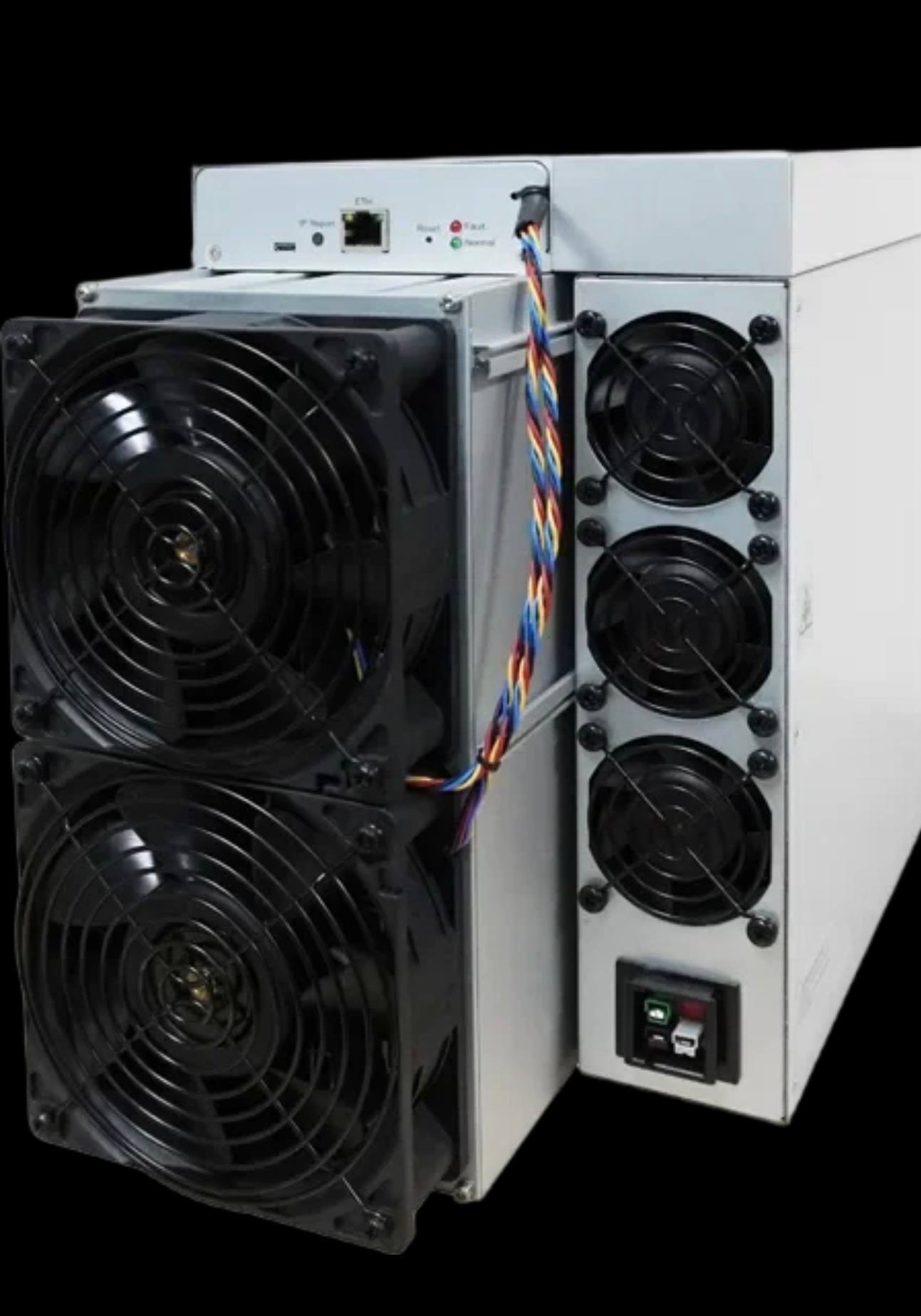
Antminer L11 hashrate and power
The figures circulating from resellers are consistent. The L11 is listed at 20 GH/s on scrypt with 3680 W power consumption, which works out to roughly 184 J/G. Those are published vendor figures — we quote them as listed, not as bench measurements, and real-world efficiency will drift with ambient temperature, PSU health and firmware.
Other published details worth having on the service sheet:
- Input voltage: 220–277 V. This is not a 120 V machine; it needs proper 240 V-class circuits.
- Four fans, 75 dB noise level — this is a hydro-adjacent or container-class unit, not a garage miner.
- RJ45 Ethernet 10/100M, standard Bitmain control board networking.
- Net weight around 15.5 kg, dimensions roughly 400 × 195 × 290 mm without packaging.
- Operating temperature range listed as 0–75 °C, humidity 10–90%.
Read the spec sheet as a power budget, not a promise
At 3680 W per unit, a single 30 A 240 V circuit cannot carry two L11s with headroom. Plan circuits around one unit plus margin, and check that your PDUs and breakers are rated for continuous load at that draw, not peak.
Antminer L11 vs L9 for scrypt fleets
The L9 has been the workhorse of scrypt farms for years, and the L11 does not replace it so much as sit above it. The comparison that matters on a service contract is density versus serviceability.
Published hashrate
20 GH/s
Lower per-unit output (L9 class)
Published power
3680 W
Lower per-unit draw
Published efficiency
~184 J/G
Higher J/G than L11
Units per MW (approx.)
Far fewer
More units, more boards to service
Cooling load per slot
High
Moderate
Typical service profile
Fewer units, higher value per repair
Volume board swaps and PSU rotation
Two practical consequences follow. First, the L11 concentrates value: a single failed hashboard on an L11 costs more revenue per hour than a failed board on an L9, so diagnosis speed matters more than board-swap throughput. Second, the L9 fleet does not go away. Most US sites we work on run mixed rows, and the L11 needs its own thermal and electrical assumptions rather than inheriting the L9 playbook.
If you are deciding where to put capital, the honest framing is: the L11 buys you hashrate per square foot, the L9 buys you lower power density and cheaper per-unit service. Neither is wrong; they are different rack designs.
Hashboard, control board and PSU repair on the L11
The L11's failure surface is familiar Bitmain territory — the same three subsystems fail, just at higher current. On-site diagnosis follows a fixed order so you are not swapping parts blind.
Step 1
Pull the kernel log
Read per-chain ASIC counts and error rates from the control board log. A chain that drops chips or shows rising HW errors is a hashboard problem, not a PSU problem.
Step 2
Check the PSU rails under load
Measure the 12 V-class output under real load, not open-circuit. Sagging rails under a 3680 W draw produce exactly the symptoms operators misread as dead hashboards.
Step 3
Isolate the control board
Swap in a known-good control board and re-read the log. Network drops, boot loops and missing chains with clean rails usually land here.
Step 4
Board-level repair on the bench
Once the faulty hashboard is identified, chip-level work — ASIC replacement, voltage regulator and buck converter repair, trace and via repair — happens at component level, not by board replacement.
Step 5
Burn-in before return to rack
Repaired boards go back under load for a burn-in window before the unit rejoins the row, so a marginal fix does not fail again at 3 a.m.
Hashboard repair
ASIC-level diagnosis, voltage regulator and buck converter faults, trace damage, and per-chip replacement on scrypt hashboards.
Control board service
Boot failures, corrupted firmware, Ethernet and SD-card faults, and chain-detection problems traced to the control board.
PSU repair and replacement
Output rail testing under load, capacitor and switching faults, and matching replacement units to the L11 power envelope.
A note on the 220–277 V input: a meaningful share of "dead miner" tickets on high-draw units trace back to the supply side — a marginal breaker, a PDU contactor, or a circuit shared with another load. Confirm the feed before you pull the unit out of the rack.
L11 warranty and service expectations
Resellers list a 180-day factory warranty on the L11, and at least one European distributor advertises paid extensions up to two years for private customers. That is the commercial picture; what it means operationally is that the factory window is short relative to the service life of a 3680 W machine running continuously.
What to expect from a competent service provider, whether in-house or on-site:
- Documented diagnosis before quote. Per-chain log readings, rail measurements and a named faulty component — not "hashboard bad, replace."
- Component-level repair, not board swapping. A repaired hashboard should come back with the specific failed ASIC or regulator identified.
- Burn-in under load. A board that passes a bench check and fails at temperature is not repaired.
- Spares planning. Keep at least one spare control board and PSU per row so a single failure does not idle a unit for a week.
- Warranty paperwork discipline. Serial numbers and purchase dates on file before the first failure, not after.
For US sites, the practical constraint is turnaround. Shipping a 15.5 kg unit both ways costs time and money; on-site board-level service keeps the unit in the row and the row hashing. That is the case for scheduling preventive inspection on L11 rows — thermal imaging, rail checks and log review — rather than waiting for a chain to drop.
If you are running L11s alongside an L9 fleet, the two need separate service cadences. The L9 tolerates volume board swaps; the L11 rewards getting the diagnosis right the first time.
Frequently asked questions
What are the Antminer L11's published specs?
Vendor listings state 20 GH/s on scrypt at 3680 W, about 184 J/G, 220-277 V input, four fans and RJ45 Ethernet. Treat these as published figures, not measured ones.
How does the L11 compare with the L9 for a scrypt farm?
The L11 delivers roughly twice the L9's hashrate per unit at a higher per-unit wattage, so fewer machines cover the same output but each rack slot carries more power and heat. The L9 remains the lower-density, easier-to-cool option.
Can an Antminer L11 be repaired at board level?
Yes. Hashboards, control boards and PSUs are all serviceable at component level. Diagnosis starts with per-board log readings and voltage rail checks before any chip work.
What warranty should I expect on an L11?
Resellers list a 180-day factory warranty, with some offering paid extensions. Board-level repair is usually the cheaper path once that window closes.
Repair & maintenance
Get Your Miners Back to Full Hashrate
Chip-level diagnostics, component-level repair, and burn-in validation — on-site across the USA, no shipping required.